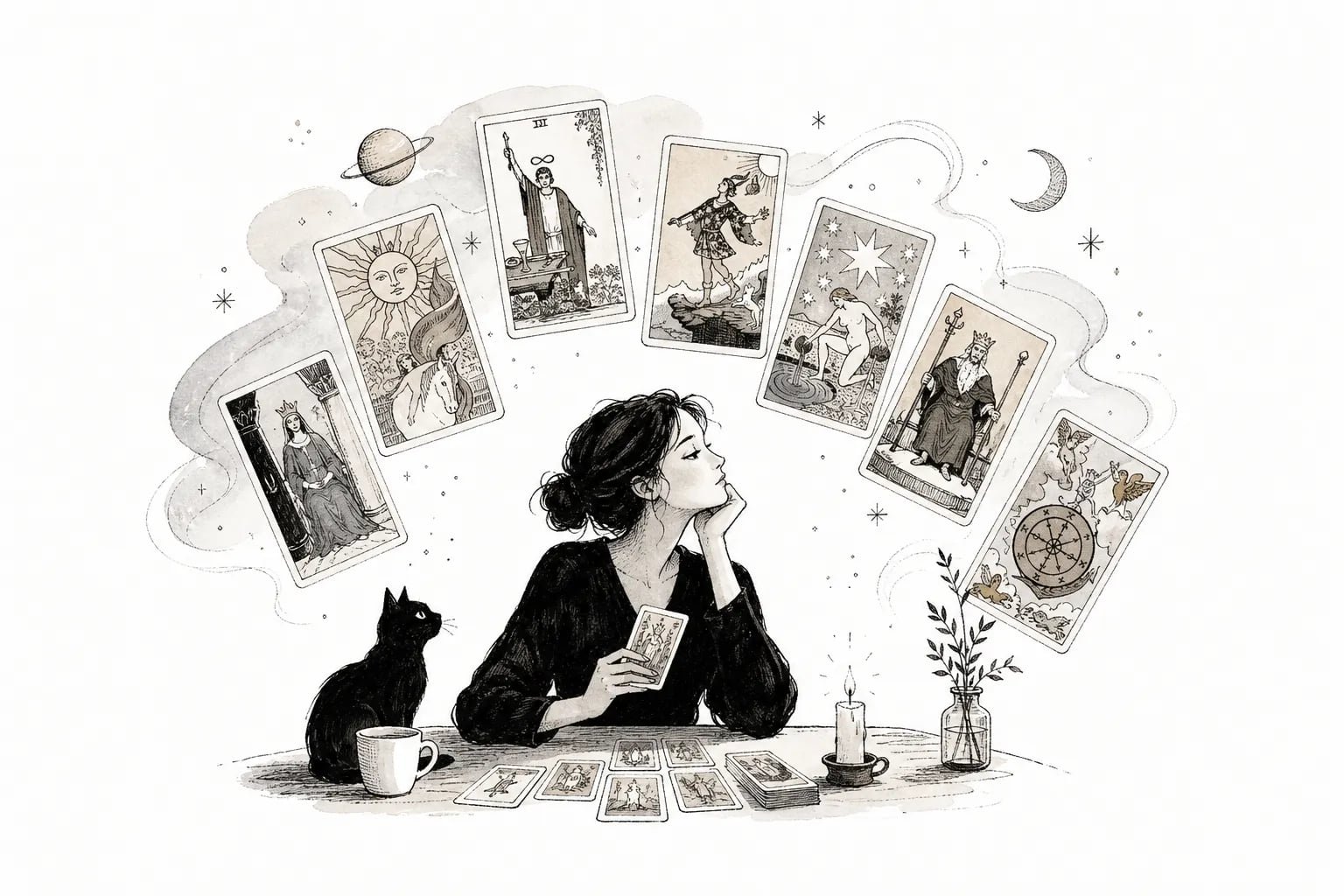
Major arcana meanings form the backbone of any serious tarot practice, yet most beginners hit the same wall: 22 cards, dozens of layered meanings, and no clear thread connecting them. It feels like a vocabulary list with no grammar. The good news is that these cards are not a collection of isolated symbols. They tell a single, sequential story called the Fool’s Journey, moving from innocence through struggle, transformation, and ultimately wholeness. Once you see that arc, the meanings stop being facts to memorize and become scenes in a story you already recognize.
That recognition runs deeper than you might expect. Across traditions, including mythology, psychology, and scripture, the Major Arcana archetypes surface repeatedly because they map universal human experience. Faith-based readers and scholars alike have noted this resonance. Biblical Tarot Decks was built on that recognition, pairing each of the 22 cards with a corresponding biblical figure or story so that Christian readers can engage these archetypes through scripture they already carry. By the end of this guide, you will know the core meaning and one-word keyword for all 22 cards, understand how upright and reversed interpretations differ, and have a memorization strategy you can use right now.
What the Major Arcana actually represents in a tarot deck
The 22 cards as a complete psychological map
Rather than a random assortment of symbolic images, the Major Arcana tells a sequential story: the Fool begins as pure potential at card 0, moves through encounters with teachers, trials, and crises, and arrives at wholeness at card 21. Each card holds an archetypal theme that psychology, mythology, and scripture have long recognized. This is why Major Arcana cards carry more weight in a reading than Minor Arcana cards. When a Major appears, it points to a life-level turning point, not a passing circumstance.
Psychologically, this arc is often called individuation: the gradual process of confronting and integrating the full contents of the psyche into a more complete self. The Magician builds a will. The Hermit retreats to examine it. The Tower breaks what was built on false ground. Each stage answers the previous one, which is what makes the sequence feel inevitable once you know it.
How biblical narrative naturally parallels each archetype
Faith-rooted readers often find the Major Arcana surprisingly familiar territory, precisely because the archetypes describe human experience rather than invent it. Moses channels divine will the way the Magician does. Adam and Eve face the same weight of choice as the Lovers. The Hanged Man’s suspended sacrifice maps onto New Testament themes of surrender and redemption. Biblical Tarot Decks draws its most powerful scriptural parallels from exactly these resonances, pairing each of the 22 cards with a biblical figure or story so the meanings click without requiring readers to decode an unfamiliar symbol system from scratch. It is worth noting that these pairings are common among faith-based readers but not universal; they represent one well-developed interpretive tradition rather than a fixed doctrine.
Major arcana meanings: cards 0, 7 and the outer journey
The Fool through The Hierophant (cards 0, 5)
The Fool (0, Beginnings) steps off the cliff with full trust and zero plan. Upright, this card signals a new beginning, a leap of faith, pure openness to what comes. Astrologically linked to Air or Uranus within the Rider, Waite/Golden Dawn tradition, it carries the energy of the divine child before experience shapes them.
The Magician (I, Manifestation) takes that raw potential and directs it with focused will. Mercury rules this card, and its upright meaning centers on using every available resource to bring something real into being. The High Priestess (II, Intuition) holds what the Magician cannot see: the lunar, receptive wisdom of the unconscious. Upright, she calls you to trust what you sense before you can prove it.
The Empress (III, Abundance) brings Venus energy into the picture: fertility, nurture, creative life. She is the mother archetype in full expression. The Emperor (IV, Authority) brings structure to that abundance through Aries-ruled discipline and leadership. The Hierophant (V, Tradition) then translates that authority into transmitted teaching: doctrine, ritual, the community’s shared spiritual framework. Notice the numerological arc from 0 to 5, pure potential becomes a functioning cultural structure.
The Lovers through The Chariot (cards 6, 7)
The Lovers (VI, Union) and The Chariot (VII, Willpower) close this first group. The Lovers card, ruled by Gemini, is less about romance than about alignment of values and the weight of genuine choice. The Chariot, ruled by Cancer, shows what happens when that choice is made with complete commitment: forward motion, controlled drive, victory through focused will. These first eight cards deal primarily with the outer world, identity, relationship, social role, and directed ambition.
This outer orientation matters when you read these cards in a spread. Cards 0, 7 often point to external circumstances, visible choices, and the roles a person plays in the world. The internal shift happens at card 8, and that transition changes everything about how the rest of the journey reads.
Cards 8, 14: The inner journey through shadow and surrender
Strength through Wheel of Fortune (cards 8, 10)
Strength (VIII, Courage) opens the inner arc not with brute force but with patient, compassionate mastery of the self. Leo rules this card, and its upright meaning is specifically inner courage: the capacity to hold your own wildness with gentleness rather than suppression. The Hermit (IX, Reflection) takes that courage into solitude. Ruled by Virgo, the Hermit asks whether you are willing to sit honestly with yourself, apart from the noise of external life. The Wheel of Fortune (X, Change) then reminds you that cycles are not punishment; Jupiter’s expansive energy marks this card, and its upright meaning centers on accepting that turning points are the structure of a life, not disruptions to it.
Justice through Temperance (cards 11, 14)
Justice (XI, Fairness) calls for accountability and truth. Ruled by Libra, it reads upright as a reminder that honest reckoning, not avoidance, creates real resolution. The Hanged Man (XII, Surrender) is where the journey slows completely: Neptune’s energy suspends forward motion so that a necessary shift in perspective can occur. For faith-based readers, this card’s resonance with themes of sacrifice and surrender is among the strongest in the deck. Death (XIII, Transformation) follows, ruled by Scorpio; upright, it signals an ending that makes room for something genuinely new, not loss for its own sake. Temperance (XIV, Balance) closes this cluster with Sagittarius-ruled healing: the integration of what the previous three cards broke open.
This middle cluster is where shadow work and inner healing live most visibly. The Hanged Man and Death in particular carry deep resonance with Christian themes of dying to self and renewal, which is why Biblical Tarot Decks draws some of its most powerful scriptural parallels here, mapping these cards to passages about sacrifice, resurrection, and peace.
Cards 15, 21: Cosmic reckoning and the return to wholeness
The Devil through The Moon (cards 15, 18)
The Devil (XV, Attachment) confronts what the Hanged Man and Death tried to release: the material bondage and denied desires that keep a person circling the same patterns. Capricorn rules this card, giving it a grounded, heavy weight. The Tower (XVI, Upheaval) arrives under Mars when avoidance has run out of runway: sudden revelation, the collapse of what was built on false foundations. Its biblical parallel to the Tower of Babel is one of the most widely recognized pairings in faith-based tarot reading.
The Star (XVII, Hope) rises after the Tower’s wreckage. Ruled by Aquarius, its upright meaning is genuine renewal, not naive optimism, but the calm restoration that becomes possible once false structures are gone. The Moon (XVIII, Illusion) extends the uncertainty through Pisces-ruled mystery and fear; the path is not yet clear, and the Moon does not offer clarity. It offers the invitation to move through darkness without demanding answers before you are ready.
The Sun through The World (cards 19, 21)
The Sun (XIX, Joy) delivers what the Moon withheld: clarity, vitality, and confidence. This is the solar archetype in full expression, and upright it signals a period of genuine success and alignment. Judgement (XX, Awakening) then calls the Fool to account with full honesty: this card’s imagery of rising and answering a call maps directly to resurrection and divine reckoning themes in Christian scripture. Upright, it signals that the moment to answer something important has arrived. The World (XXI, Completion) brings the arc full circle. The Fool who stepped off the cliff at card 0 arrives at integrated wholeness, every lesson taken in, every shadow faced, every cycle completed.
Major arcana meanings: quick reference cheat sheet
Use this at-a-glance index to anchor the tarot major arcana meanings before diving deeper into any single card. Astrological correspondences follow the Rider, Waite/Golden Dawn system.
| Number | Card | Keyword | Core upright meaning |
|---|---|---|---|
| 0 | The Fool | Beginnings | A leap of faith into new experience with open, unguarded trust |
| I | The Magician | Manifestation | Focused will that directs available resources toward a real outcome |
| II | The High Priestess | Intuition | Receptive inner knowing that precedes logical proof |
| III | The Empress | Abundance | Fertile, nurturing creative energy in full expression |
| IV | The Emperor | Authority | Structured leadership that gives form and stability |
| V | The Hierophant | Tradition | Transmitted wisdom held within community and shared ritual |
| VI | The Lovers | Union | Alignment of values through a deliberate, consequential choice |
| VII | The Chariot | Willpower | Controlled drive that moves forward through committed focus |
| VIII | Strength | Courage | Compassionate mastery of inner wildness through patience, not force |
| IX | The Hermit | Reflection | Honest solitude that turns the lantern inward |
| X | Wheel of Fortune | Change | Acceptance that cycles and turning points are the structure of a life |
| XI | Justice | Fairness | Honest reckoning that creates real resolution rather than avoidance |
| XII | The Hanged Man | Surrender | Willing suspension that allows a necessary shift in perspective |
| XIII | Death | Transformation | A necessary ending that clears ground for genuine renewal |
| XIV | Temperance | Balance | Integrating opposites into a healing, sustainable flow |
| XV | The Devil | Attachment | Bondage to patterns driven by denied desires or material fear |
| XVI | The Tower | Upheaval | Sudden revelation that collapses what was built on false ground |
| XVII | The Star | Hope | Calm renewal after upheaval; restoration grounded in truth |
| XVIII | The Moon | Illusion | Moving through uncertainty and fear without forcing premature clarity |
| XIX | The Sun | Joy | Clarity, vitality, and genuine confidence in a period of alignment |
| XX | Judgement | Awakening | Answering a significant call with full honesty and readiness |
| XXI | The World | Completion | Integrated wholeness after every lesson has been lived and faced |
Reading upright vs. reversed major arcana meanings
How reversals shift the card’s energy
Reversals do not flip a card’s meaning to its opposite. Three widely accepted frameworks apply across contemporary tarot teaching: blocked energy, internalized energy, and shadow expression of the archetype. A reversed Strength card does not mean weakness as a fixed truth; it signals that courage is blocked, or that it has turned inward as self-doubt rather than compassionate action. This keeps reversals actionable rather than fatalistic, which matters enormously when you are using these cards for reflective practice.
Common reversal patterns across the 22 cards
Rather than memorizing 22 individual reversed meanings, learn them by cluster. The first seven cards reversed often show hesitation, misuse of power, or confusion about roles: a reversed Emperor signals rigidity or weak leadership; a reversed High Priestess points to ignored intuition. The middle cards reversed tend to surface resistance to inner work or fear of necessary change: a reversed Death card is almost always about avoiding an ending that needs to happen. The final cards reversed often signal incompletion, delayed awakening, or missed closure, a reversed World card points to a cycle not yet integrated, lessons circling back for one more pass.
Many readers find reversed Major Arcana especially instructive during seasons of transition, when shadow patterns surface most visibly and the gap between where a person is and where the card’s energy wants to move them is easiest to see.
Practical ways to remember all 22 major arcana meanings
The Fool’s Journey as a memory spine
Treating the 22 cards as one continuous story is the most reliable memorization approach available. When you can narrate the Fool’s arc from 0 to 21 in a few sentences, the meanings stop being isolated facts and become connected scenes your mind can walk through. Write a brief paragraph in your own words telling the Fool’s Journey, using each card as a plot point. If you can tell that story without looking at your notes, you have learned the Major Arcana in its most meaningful form. The sequence carries the individual card meanings with it.
Your next step with the Major Arcana
You now hold the essential framework: a keyword for each card, a sense of how reversals shift the energy, and the Fool’s Journey as your memory spine. Anchor the three clusters and the arc between them, and you have enough to read with real confidence. Use these major arcana meanings as a devotional or journaling tool, and return to the cheat sheet above whenever you need a quick reference.
These meanings carry even more weight when each archetype is held alongside a story that already matters to you. That is the premise behind Biblical Tarot Decks: when the High Priestess is grounded in Mary’s quiet wisdom, when the Hanged Man is held alongside the cross, when Judgement echoes the resurrection, the card stops being a symbol to decode and becomes a mirror reflecting something you already believe. The way a deck is built changes what it can offer you.
Explore the Major Arcana through whatever lens aligns with your spiritual life. Use it as a reflection tool, a journaling anchor, or a devotional prompt. Many modern readers engage these cards primarily for self-examination and psychological insight rather than fortune-telling, a way to see themselves more clearly and move through their own story with greater honesty and intention.