
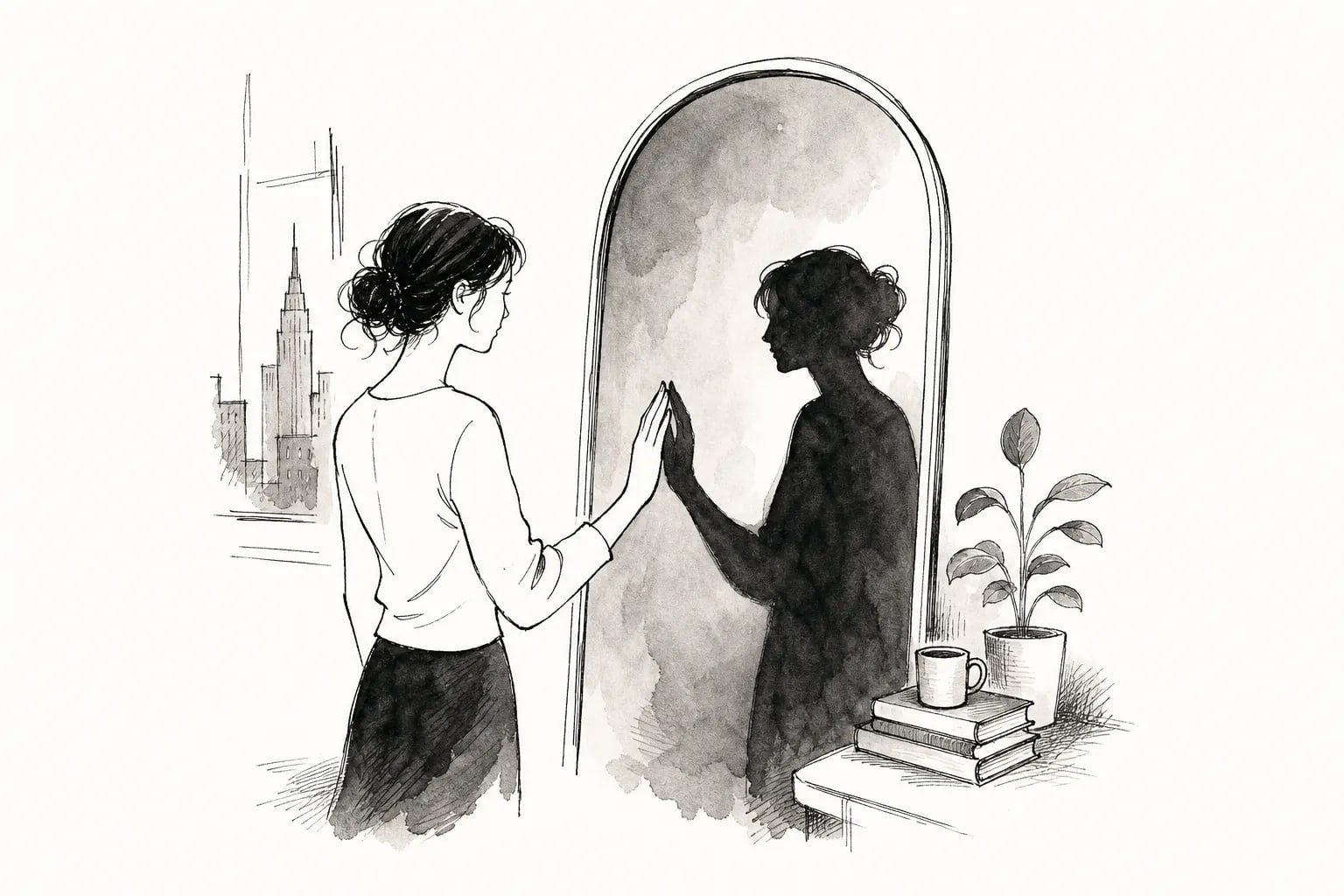
If you’ve ever asked yourself what is shadow work and how do I start, you’re already paying attention to something important. You know that moment. Someone says something small and you react with a force that shocks even you. Or you end another relationship, swearing it will be different this time, and six months later you’re watching the same script play out word for word. That gap between what triggered you and how hard you landed is not a character flaw. It’s the shadow at work.
Shadow work is the practice of turning toward the parts of yourself you’ve pushed into the dark, the impulses you’ve denied, the emotions you learned weren’t safe to feel, and the traits you’d rather not admit you carry. The goal is not to excavate your worst moments for sport. The goal is to stop being quietly governed by material you’ve never examined. When those buried parts are seen and integrated, they lose their grip on your choices, your reactions, and your relationships.
The term gets thrown around in wellness circles so casually that it can start to feel abstract or trendy. This guide makes it concrete. By the time you finish reading, you’ll understand what shadow work actually is, know whether it’s safe to begin on your own, and have a beginner-ready plan that includes journaling prompts, a shadow-mapping template, and a tool recommendation for those who want a spiritually grounded entry point.
What the shadow self actually is
Carl Jung, the Swiss psychiatrist who developed analytical psychology in the early 20th century, coined the term “shadow” to describe the parts of the psyche a person doesn’t consciously identify with. In his own words, the shadow is “everything the subject refuses to acknowledge about himself.” That’s a wide category. It includes repressed anger, denied vulnerability, creative impulses that felt too risky to express, and emotions that were labeled unacceptable early in life.
The shadow is not evil. Jung was careful about this. The shadow is simply unlived. It holds traits and potentials that didn’t fit the version of yourself you had to become in order to belong, to be loved, or to survive. The phrase “shadow work” came later, used by Jungian analysts and writers to name the practice of actually integrating that material rather than projecting it onto the world. Jung himself used the phrase “shadow assimilation,” noting that it requires “considerable moral effort” precisely because it means meeting yourself without the flattering filter.
In everyday life, shadow material shows up as outsized reactions: snapping at someone you love over something minor, feeling disproportionate contempt for a person who expresses a need you were never allowed to have, or noticing a sudden flash of envy that you immediately try to suppress. Other common patterns include chronic people-pleasing, compulsive perfectionism, and judging in others the exact traits you can’t acknowledge in yourself. These signals aren’t problems to fix on the surface. They’re invitations to look deeper.
Why shadow work changes everything
Shadow integration produces real, documented shifts. People who engage in Jungian shadow work consistently report greater self-awareness, a faster ability to catch triggers before they take over, less shame and self-criticism, and more honest, stable relationships. When you integrate a shadow trait rather than projecting it onto others, you stop needing the people around you to carry it for you. That relieves enormous pressure from your closest relationships.
The benefits of shadow work done well don’t make you darker. They make you more whole. There’s a quality of emotional freedom that comes from recognizing a familiar trigger and thinking, “I see what this is,” rather than being swept away by it. That kind of self-knowledge doesn’t require years of analysis. It requires consistent, honest attention.
The cost of leaving the shadow unexamined is just as real. Shadow material doesn’t dissolve from being ignored. It drives behavior from underneath, showing up as chronic self-sabotage, as the same relational pattern repeated across different relationships with different people, and as a low-grade sense that something keeps pulling you off course no matter how hard you try. That unnamed pull is almost always inner shadow work waiting to happen, material that needs to be seen rather than managed.
What is shadow work and how do I start: safety and when to work with a professional
Shadow work is a legitimate self-reflection practice for psychologically stable people. It is not a substitute for therapy and is not appropriate for everyone to pursue without professional support. Be honest with yourself here before you begin.
If you have active PTSD or complex trauma, frequent dissociation, psychotic symptoms, acute suicidal thoughts, or severe mood instability, do not attempt deep inner shadow work alone. The practice can surface material that destabilizes rather than heals when there’s no professional container holding the process. A trauma-informed therapist or a Jungian-influenced counselor can guide shadow work exercises at a pace your nervous system can actually tolerate. Finding that support first is not a detour from the work. It is the work.
For those who are ready to begin on their own, the most important principle is this: keep sessions short, grounded, and focused. Most practitioners recommend starting with 10 to 15 minutes maximum. Before you open your journal, spend a minute orienting to the room. Feel your feet on the floor. Breathe slowly. Work on one recent situation rather than your deepest wound. If you start to feel shaky, numb, or flooded, stop the session and do something grounding: move your body, drink water, step outside for a few minutes. End every session intentionally. The goal is curiosity, not excavation.
What is shadow work and how do I start: 3 exercises for beginners
Shadow journaling prompts that surface what you’ve buried
Journaling is the most accessible entry point because it requires nothing except a notebook and a willingness to be honest. Start with a recent trigger or a strong emotional reaction, describe the event in plain facts first, then follow the feeling inward. The following shadow work exercises are designed to do that gently.
- What triggered me strongly today, and what story did I immediately tell myself about it?
- What did I judge in another person today that I might recognize in myself?
- What trait in others irritates or attracts me most, and what does that mirror in me?
- What am I afraid people would discover about me if they saw everything?
- What emotion do I consider “unacceptable,” and where did I learn that?
- What does my envy this week tell me about what I actually want?
- What younger version of me is still reacting in this situation?
Spend 10 minutes on just one prompt. Let the answer be messy and unfiltered. The analytical mind will want to tidy the response. Resist that. The raw, unedited answer is the one worth reading.
The shadow-mapping technique: a simple template to use right now
Shadow mapping is a slightly more structured tool than journaling. Where journaling follows one feeling inward, shadow mapping helps you identify the recurring patterns beneath multiple triggers. Start by listing 5 to 8 traits you would hate to be described by, selfish, needy, controlling, weak, angry. Then write one honest example of a recent moment when you actually showed that trait, even a little.
Next, list two or three people who trigger strong judgment or envy in you and ask what quality they express that you might be suppressing in yourself. Group the results into themes: fear of rejection, need for control, hidden anger, chronic shame. The template itself is simple enough to use right now:
- Trigger: What happened?
- Reaction: What did I feel, think, or do?
- Need underneath: What might I have needed in that moment?
- Pattern: When else does this show up in my life?
- Cost: How does this pattern affect me?
- Small next step: What is one small thing I can try differently?
A worked example: a colleague gave critical feedback in a meeting. You felt defensive and went quiet for the rest of the day. The need underneath was reassurance and clarity, not criticism delivered cold. The pattern shows up whenever you feel unprepared or evaluated. The cost is that you avoid feedback loops and stay chronically stressed. The small next step: the next time it happens, pause, breathe, and ask one clarifying question before responding. That’s it. One small step, not a transformation. The transformation accumulates through repetition.
A 5-minute guided imagery check-in
For readers who want a more embodied approach, this brief visualization works well as a companion to journaling. Sit somewhere quiet and comfortable. Slow your breath and do a brief body scan, noticing areas of tension without trying to change them. Bring one recent trigger to mind and imagine the hidden part of yourself that carries that reaction as a figure, a presence, or even just a shape or color. Ask it gently: “What are you protecting? What do you need? What have you been trying to show me?” Let the answers rise without forcing them. They may come as images, sensations, a single word, or a memory.
Close the practice by thanking that part, then write a sentence or two about what surfaced. Do not judge what came up. This practice accesses material the analytical mind tends to guard, and pairing it with the shadow-mapping template afterward often produces insights that pure journaling alone won’t reach.
A tool that makes shadow work spiritually richer
For many people, shadow work feels more sustainable when it’s anchored to something larger than psychology alone. A spiritual lens provides a container of meaning that pure introspection can lack. This matters especially for believers who carry an unresolved question about whether inner healing work is spiritually appropriate. The biblical narrative has always held the full spectrum of human experience: grief, rage, doubt, shame, desire. The Psalms alone cover more emotional territory than most therapeutic frameworks. Shadow work, from this view, is simply returning to what the stories always knew.
Biblical Tarot: Shadows of the Soul, published by Biblical Tarot Decks, is a 79-card system designed specifically for shadow work and inner healing. Each card pairs Rider-Waite symbolism with a biblical story or scripture passage, functioning as a reflection tool rather than a divination instrument. For shadow work practitioners who want their practice to honor their faith, the deck moves a journaling session from abstract self-analysis into a tangible, story-based encounter with scripture-grounded images. It works particularly well as a companion to the journaling prompts and shadow-mapping exercises covered in this guide. Rather than staring at a blank page, you have a visual prompt rooted in Christian narrative that invites the question: “What does this story have to do with what I’m carrying right now?” That question, asked honestly, opens doors that purely psychological tools sometimes don’t.
Building your first week of shadow work
The most common mistake when starting a new reflective practice is trying to do too much too fast. Three sessions of 15 minutes each, spaced two to three days apart, is a realistic and sustainable first week. Session one: choose one journaling prompt and write for 10 minutes on a recent trigger. Session two: use the shadow-mapping template on a recurring pattern you’ve noticed. Session three: try the guided imagery check-in. After each session, spend two minutes writing one insight and one small thing to try before the next session. Keep the scope narrow. Depth comes with practice, not duration.
Signs the practice is working include noticing triggers faster, feeling less controlled by old reactions, and approaching your own behavior with more curiosity and less immediate shame. Signs to pause and reassess include persistent distress between sessions, sleep disruption, emotional flooding that doesn’t settle, or a sense that the ground is shifting under you without stabilizing. At that point, bring the work to a therapist rather than pressing harder alone. Respecting your nervous system is not a detour around the work. It is the work.
Where to go from here
Return to that moment from the opening. You react, and somewhere underneath the reaction you sense that something older and deeper is driving it. Shadow work gives you a way to meet that something with honesty rather than avoidance. You now have the foundation to do exactly that.
You leave this guide with four concrete things: a clear understanding of what shadow work is and where it comes from, a realistic picture of its benefits and its limits, a beginner-safe starting routine with session-by-session structure, and a set of specific tools, journaling prompts, a shadow-mapping template, and for those who want a scripture-grounded entry point, Biblical Tarot: Shadows of the Soul.
Now you know what shadow work is and how to start, and starting is simpler than it sounds. The work doesn’t require perfection or deep psychological training. It requires consistency and honesty. Start with one prompt. Give yourself 10 minutes. Write without editing. That’s where shadow integration begins.