
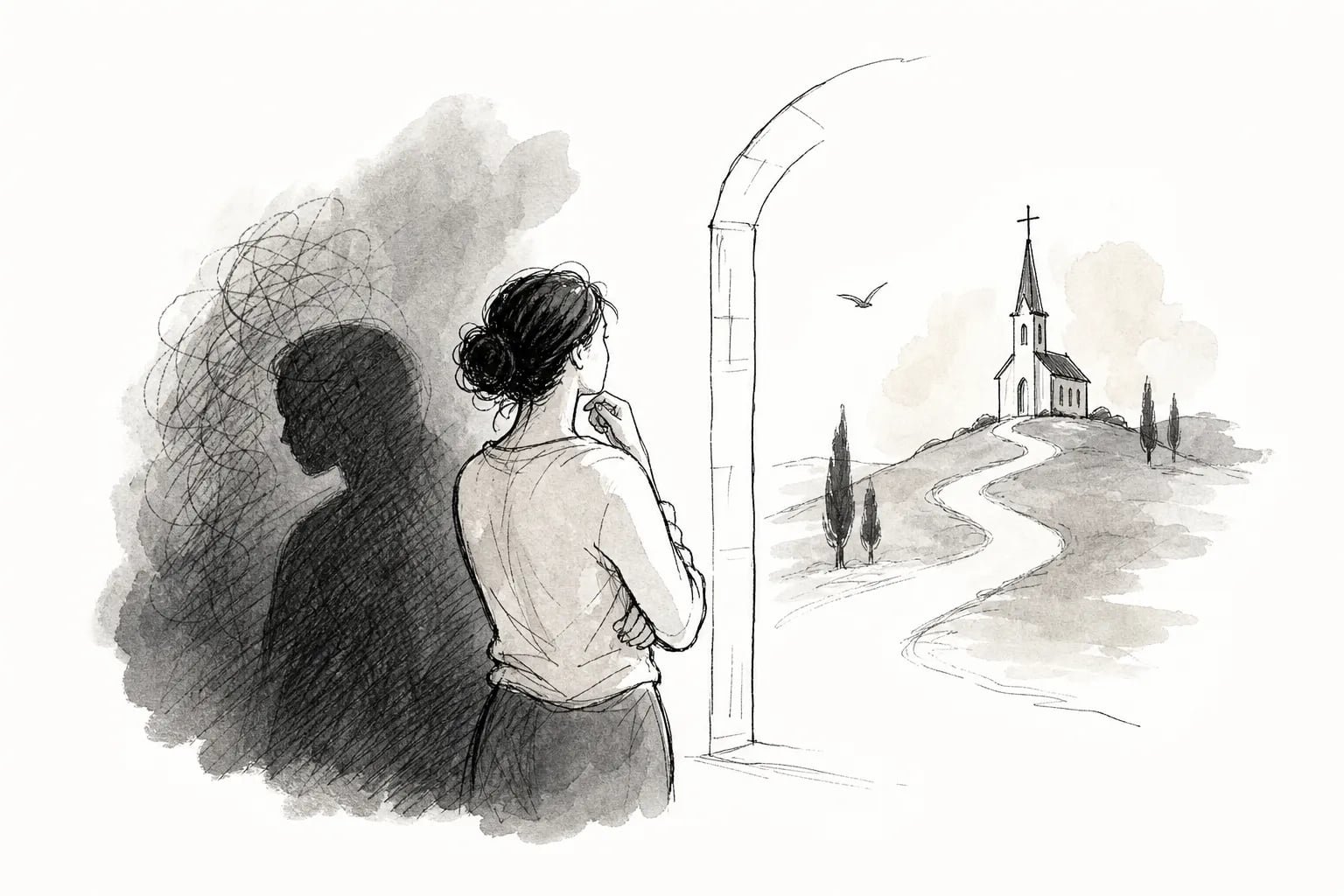
The first time many Christians encounter the phrase “shadow work and faith” together, something tightens in the chest. It sounds either vaguely therapeutic or, worse, spiritually suspicious. If you’ve felt that pull between curiosity and caution, you’re not alone. Your discomfort deserves a real answer, not a dismissal.
Here’s the truth: the Bible has never shied away from inner darkness. Its most beloved figures wrestled with shame, rage, doubt, and self-deception in full view of God. The Psalms read like a raw therapy journal, raw cries of abandonment, confession, and hard-won trust. Paul’s letters dissect the divided will with startling psychological clarity, particularly in Romans 7. Many streams of the Christian tradition have long emphasized that growth requires confronting what hides in the dark. Shadow work, when held inside a faith framework, isn’t a detour around that tradition. It’s a modern name for something the Spirit has always been doing in willing souls.
If you’re sitting at that crossroads, Biblical Tarot: Shadows of the Soul was built for exactly this tension. Start with the definition itself.
What shadow work and faith both address
Carl Jung coined the term “shadow” to describe the parts of the personality that the conscious ego has disowned or repressed. These aren’t necessarily evil traits. They’re the emotions, impulses, and capacities that felt too risky or unacceptable to own, so the psyche quietly tucked them away. Shadow work is the practice of becoming aware of those hidden patterns and integrating them, rather than letting them run your life from the background. The goal is wholeness, not a descent into darkness.
Think of it this way: if you grew up in a household where anger was dangerous, you probably learned to suppress it. That anger didn’t disappear. It went underground, and now it surfaces sideways as passive aggression, chronic resentment, or a hair-trigger temper that surprises even you. Shadow work names that pattern and asks what it’s protecting you from. That’s not occult practice. That’s honest self-examination.
Shadow work is not divination, fortune-telling, or spiritual dabbling. It is not a secular substitute for prayer or repentance. At its core, Jungian shadow work is psychological introspection, a structured form of looking inward that is strikingly similar to what Christian tradition calls an examination of conscience. The framework differs; the interior motion is recognizable.
The Bible’s own stories of inner wrestling
Jacob spent a night wrestling an opponent at the Jabbok river and walked away with a limp and a new name. It is hard to miss what this story is doing: a man who spent his life running from who he was, a deceiver and supplanter, finally unable to run. God didn’t avoid that encounter. God initiated it. The blessing came after the struggle, not instead of it.
David wrote psalms that name shame, rage, and despair without softening them. Psalm 22 opens with outright abandonment: “My God, my God, why have you forsaken me?” Psalm 51 is a confession that goes bone-deep. These are not polished worship songs. They are the prayers of a man who brought his full interior life, including the parts he was most ashamed of, before God without editing.
Paul in Romans 7 describes something that sounds remarkably like this kind of inner work: “What I want to do I do not do, but what I hate I do.” He names the divided inner life without flinching, makes no excuses, and offers no resolution through willpower alone.
The theological heart of that passage is precisely this: what stays hidden tends to control; what gets named can begin to heal. Spiritual formation and psychology arrive at the same conclusion by different routes. Confession and inner work share a common logic, honesty before God and self is the condition for transformation, not an obstacle to it.
Where shadow work and faith genuinely overlap
Christian confession, at its best, is already shadow work. It’s the practice of bringing what is concealed into the light, naming a pattern honestly before God, and receiving forgiveness rather than shame. Both practices require the same courageous move: you have to say the thing you’d prefer to pretend isn’t true. Both promise some form of release. The overlap isn’t superficial; it’s structural.
Sanctification, the ongoing process of becoming more Christlike, has never been a comfortable march toward improvement. It has always involved honest self-examination. The Ignatian examen. The lament psalms. Paul’s repeated calls to “test yourselves.” These are invitations to look inward with courage, not to bypass the interior life in favor of behavioral compliance. Soul care practices across the Christian tradition have always made room for this kind of interior work. This kind of inner work doesn’t invent the process. It gives it new language.
The strongest common ground is this: healing becomes spiritually meaningful when inner truth is faced honestly and shame no longer has the final word. Transformation pursued through prayer, forgiveness, and compassionate community is where inner healing and spirituality have always met, even when they use different vocabularies to describe it.
Theological concerns worth taking seriously
Some Christians worry that shadow work pulls attention inward and away from God. Others fear that “integrating” dark impulses means accepting or excusing sinful behavior. These concerns reflect real theological instincts about self-worship and moral relativism, and they deserve a fair hearing. An inward practice untethered from Scripture, repentance, and community accountability can drift. That warning is legitimate.
Pastoral counselors and faith-based therapists have developed a clear response: separate the practice from its ideological packaging. The core work is not anti-Christian, noticing hidden patterns, examining reactive behavior, bringing those realities into prayer. What matters is the framework holding it. When this kind of inner work happens inside a commitment to Scripture, repentance, and pastoral community, it looks a great deal like what the tradition has always called sanctification. Faith-based therapy doesn’t endorse every version of shadow work; it reclaims the interior movement and re-grounds it in Christ.
The key distinction is between recognition and endorsement. Naming a wound, a disowned impulse, or a buried fear is not the same as celebrating it. Bringing something into the light is what makes repentance and healing possible. Many streams of Christian tradition have always said as much. Trauma-informed spiritual practice simply insists on doing that naming carefully, with support, and without shame as the final word.
Six faith-friendly practices for shadow work and faith
These six exercises pair psychological insight with spiritual discipline. Each one is built to surface what hides and bring it to God, not to wallow in it.
- Trigger journaling with an opening prayer for honesty. When a disproportionate reaction catches you off guard, write it down. Before you begin, pray one sentence: “Lord, show me what this is really about.” Then write without editing. The trigger is rarely the real issue; the real issue is what it’s protecting.
- Lament psalms as shadow prompts. Read a lament psalm slowly, then write what it surfaces in you. Let David’s words open the door. Psalm 22, 55, or 88 are particularly honest starting points. You don’t have to manufacture emotion. Just notice what the text stirs and write that.
- A confession inventory of recurring patterns. Privately list the patterns that keep showing up: resentment, control, people-pleasing, envy, secrecy. Bring that inventory into prayer or confession. The goal isn’t self-condemnation; it’s naming what has been running unexamined.
- A two-chair dialogue. Sit in one chair and speak honestly about a behavior or motive you’re struggling to own. Switch chairs and speak as the wounded or defended part of you. This separates naming the wound from receiving grace for it.
- Body-scan discernment before quiet prayer. Scan your body for tension, numbness, or heaviness before you settle into prayer. Ask, “What feeling is held here?” Turning vague unease into something nameable is the first step toward bringing it to God with any specificity.
- Guided imagery rooted in Scripture. Close your eyes, settle into a safe imagined space, and picture bringing a fear, grief, or disowned part to Christ. Let imagination serve faith here, not replace it. Ask what He offers. Then journal and pray over what surfaces.
This is the territory where Biblical Tarot: Shadows of the Soul was designed to help. The creators describe it as a 79-card system that pairs the imagery and language of shadow work with biblical stories and figures, built as a contemplative and devotional instrument rather than a fortune-telling device. For people who process visually or who want a structured prompt for each reflection session, it offers something rare: a way to move through inner work that stays rooted in Scripture. It’s one resource among several, but it was built precisely for this crossroads, for people who want to take their interior life seriously without abandoning their biblical framework.
When shadow work and faith require professional or pastoral support
Shadow work is a reflective practice, not a clinical treatment, and that distinction matters. When it surfaces intense trauma, panic responses, dissociation, or symptoms of depression and anxiety that don’t ease with prayer and journaling, that’s not a sign to push harder. It’s a signal to bring in professional support. A trauma-informed spiritual practice always knows its limits.
The clearest red flags are worth naming directly:
- Persistent overwhelm that doesn’t resolve after stepping back from the practice
- Reactivated trauma memories that feel uncontrollable or intrusive
- Shame spirals that deepen rather than soften through prayer
- Anxiety or depression symptoms that worsen over time
- Dissociation, emotional numbness, or a sense of unreality
Seeking help in those moments is not weakness. It is wisdom, and it is what soul care at its best has always recommended. A pastor or spiritual director familiar with inner healing work, a licensed faith-based therapist, or a trauma-informed counselor can hold this work with you in ways that a solo practice cannot. Many streams of Christian tradition have never meant for this kind of interior work to happen in isolation. Community is strongly recommended and often protective, accountability and compassionate presence are not accessories to the process; they are part of it.
The soul that looks honestly is already doing the work
Shadow work and faith are not natural enemies. Many streams of the Christian tradition have long known that growth requires honesty, that what hides in the dark has power, and that bringing it into God’s light is the beginning of healing. The Bible is full of people who did exactly that, and across those narratives, again and again, God met them in the struggle.
The path through this territory isn’t complicated, though it takes courage. Understand what you’re actually doing. See it reflected in Scripture. Recognize the overlap with what the tradition has always called sanctification and confession. Acknowledge the legitimate concerns and keep the practice tethered to community and Scripture. Then practice it carefully, with honesty and with God.
Tools like Biblical Tarot: Shadows of the Soul exist because this intersection deserves resources built for it, not borrowed from worldviews that don’t share the same commitments. The soul that is willing to look honestly at itself is already responding to something the Spirit has been asking for a long time. That willingness is where the real work begins.