
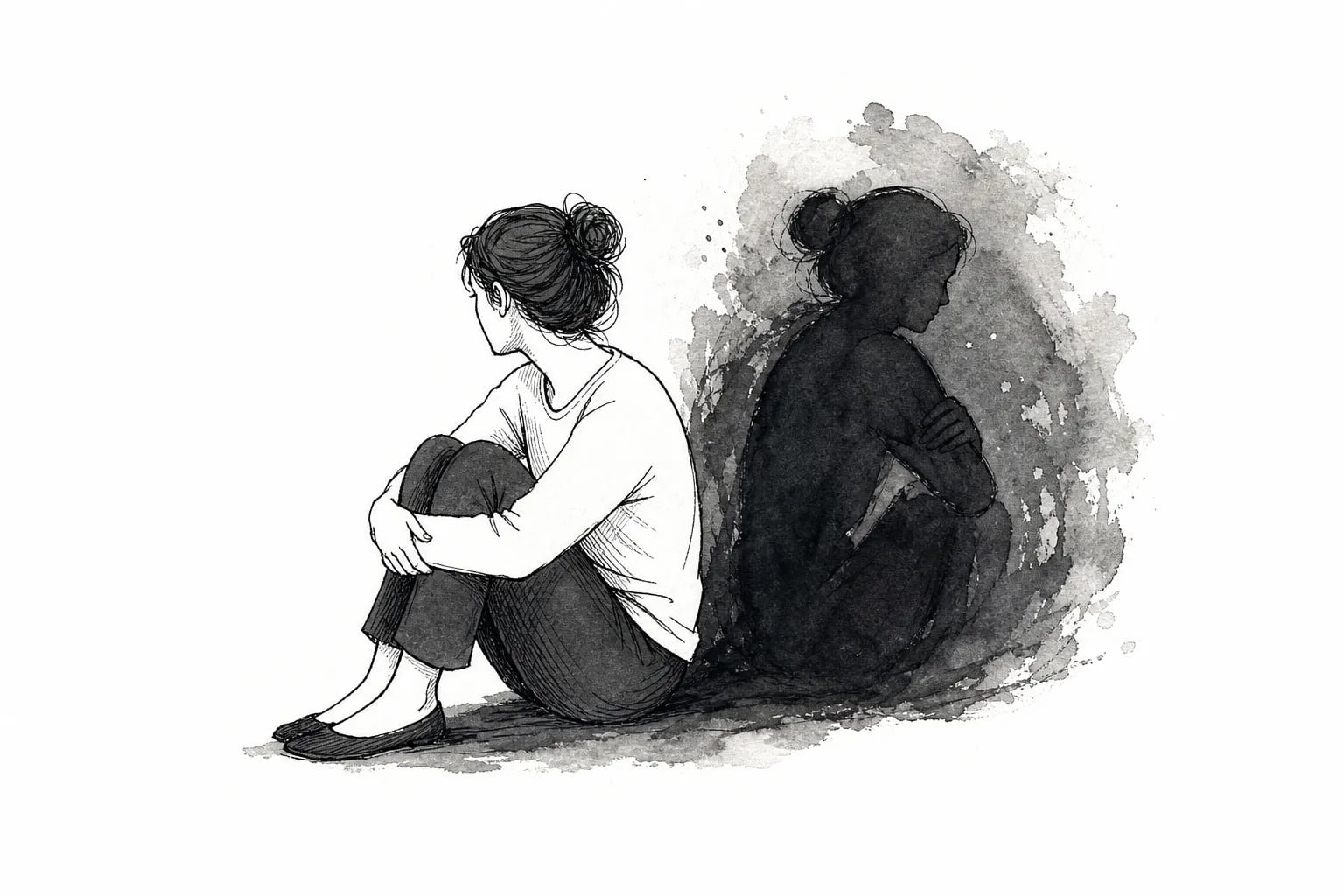
You’ve probably heard the phrase “shadow work” in a wellness podcast, a therapy session, or a spiritual community. But the definition tends to stay just out of reach, vague enough to sound meaningful and specific enough to feel intimidating. Here’s the plain version: shadow work meaning is the practice of bringing the hidden, disowned parts of your personality into conscious awareness so they stop running your life from the background. It is both a psychological practice, rooted in analytical psychology, and a spiritual one, drawing on contemplative and faith-based traditions that have long called practitioners to face what is hidden within, which is why it resonates with such a wide range of people. This article gives you a clear definition, the real origins of the practice, an honest look at benefits and risks, and a concrete starting routine you can use this week.
What the Shadow Self Actually Is
The shadow self is the part of your personality your conscious mind has pushed out of view. These are the traits, impulses, and feelings you learned to hide because they conflicted with the image you wanted to project or the person your environment told you to be. Jung described the shadow precisely as “the thing a person has no wish to be.” It’s not a metaphor for evil; it’s a description of what gets left in the dark when we decide, consciously or not, which parts of ourselves are acceptable.
One thing worth knowing from the start: the shadow holds more than your “bad” qualities. It also contains suppressed potential, unlived strengths, and buried creativity. Shadow integration is not about becoming darker. It’s about becoming more complete.
The Traits You Learned to Bury
The shadow forms early. Families, religious communities, cultural expectations, and social environments all teach children which emotions and behaviors are acceptable and which must be managed, suppressed, or hidden. The parts that get punished or shamed don’t disappear; they go underground. The child praised for being agreeable learns to bury anger. The adult raised to see vulnerability as weakness can’t ask for help even when they desperately need it. And those buried parts wait.
Why Everyone Carries a Shadow
The shadow is not a sign of damage or moral failure. Every person, without exception, carries one. The point is not to eliminate it (which isn’t possible anyway) but to acknowledge it. When shadow material stays unacknowledged, it shows up as projection onto others, reactivity that feels out of proportion, self-sabotage in moments of opportunity, and relationship patterns that repeat no matter how many times you tell yourself things will be different this time. Recognition is the beginning of change.
Shadow Work Meaning: Psychological and Spiritual Roots
Shadow work has a clear origin point: Carl Jung and the tradition of analytical psychology he developed in the early twentieth century. For Jung, meeting the shadow was not optional if you wanted to become a psychologically whole person. He called the lifelong process of becoming whole “individuation,” and integrating the shadow was one of its central tasks. The shadow, in his framework, compensates for the one-sided image the ego projects. Ignore it, and it will find ways to express itself without your permission.
Jung’s Foundational Idea and the Thinkers Who Followed
Jung’s ideas were dense and required translation for general readers. Robert A. Johnson provided that translation in Owning Your Own Shadow, one of the most recommended primers on the subject. Johnson made the shadow accessible without losing its depth, explaining how the material we deny doesn’t disappear but gets “bagged up” and carried with us. Debbie Ford brought the concept further into mainstream self-help with The Dark Side of the Light Chasers, grounding the theory in practical exercises and personal stories. These writers share credit for making shadow work a practice rather than an academic concept.
How Spiritual Traditions Picked Up the Thread
Shadow work did not stay within the walls of clinical psychology. Contemplative traditions, spiritual direction practices, and faith-based inner healing communities recognized the same territory under different language: the call to face what is hidden within us is central to nearly every serious spiritual path. For practitioners whose inner life is shaped by faith, tools grounded in scripture and biblical narrative can make this work feel native rather than foreign. Biblical Tarot: Shadows of the Soul is one such tool, designed for faith-minded practitioners who want to engage with this kind of reflection without stepping outside their biblical worldview. Each card pairs Rider-Waite symbolism with scripture, aiming to make the interior work feel grounded in story and covenant rather than purely clinical.
Why Shadow Integration Matters: The Real Benefits
Here’s an honest account: shadow work is not a clinically validated therapy in the way that cognitive behavioral therapy is. Consumer health sources including the Cleveland Clinic and WebMD note that peer-reviewed research directly testing shadow work as a named intervention is limited. What does have clinical support is Jungian-informed psychodynamic therapy broadly, which shows benefit for depression, anxiety, relationship difficulties, and emotional regulation. The benefits people report from self-directed shadow work largely align with those outcomes, which is promising. It’s just not the same as a controlled trial.
What Changes When You Stop Avoiding Your Shadow
The practical shifts people notice are real and worth naming. Fewer knee-jerk reactions to others. Relationship patterns that begin to soften. A broader and more honest sense of who you actually are. One of the most useful frameworks here is projection: the traits that trigger you most intensely in other people are often the traits you’ve most thoroughly disowned in yourself. Recognizing that doesn’t make you a worse person; it gives you information you can actually use.
The Limits of Inner Shadow Healing You Should Know
Shadow work can surface difficult material, including old wounds, painful memories, and intense emotions. It is not a replacement for therapy, and this matters especially for anyone dealing with trauma, PTSD, significant depression, or anxiety that affects daily functioning. These situations belong in professional care, not solo journaling. That boundary isn’t a discouragement; it’s a protection. Shadow work practiced with appropriate care by psychologically stable individuals is generally low-risk. But “low-risk” is a qualified statement, not a license to dig into your deepest wounds without support.
How to Begin Shadow Work Exercises Safely
The most practical guidance from established frameworks, including Jungian active imagination, Internal Family Systems, and psychodynamic journaling traditions, is to start with mild triggers, not your most raw wounds. Use grounding practices, such as slow breathing, gentle movement, or a short walk, if the work becomes overwhelming. Keep sessions short at first. Shadow work is not a sprint; it’s a long orientation toward honesty with yourself. The seven steps below are designed with that slow, sustainable pace in mind, making them appropriate even if this is your first time approaching the practice intentionally.
A 7-Step Starter Routine for Beginners
- Notice a trigger. Something bothered you. Start there. “What just happened, and why did it land so hard?”
- Name the feeling. Get specific: anger, envy, shame, fear, or disgust. Vague discomfort is harder to work with than a named emotion.
- Identify the projection. What quality in the other person or situation are you reacting to? Name it plainly.
- Ask origin questions. “When have I felt this before? Where did I learn that this quality was unacceptable?”
- Dialogue with the part. Write as if you’re addressing the disowned quality directly. Let it answer without censoring the response.
- Own the trait lightly. Try a sentence like “I can be controlling,” or “I also want approval.” You don’t have to broadcast it; just let it be true in your journal.
- Integrate one small action. Find the healthy version of the underlying need and practice it in one low-stakes way this week.
Shadow Work Journal Prompts to Try This Week
These prompts draw on widely used therapeutic frameworks, including Jungian active imagination and psychodynamic journaling, and work well as starting points. Pick one, sit with it for ten minutes, and write without editing yourself.
- What traits in others bother me most, and what might that reveal about me?
- What parts of myself do I hide from people I want to impress?
- What did I get praised for as a child, and what did I get shut down for?
- What emotion keeps showing up in my closest relationships?
- What would the part of me I judge most harshly ask for, if it felt safe?
- What am I protecting by behaving the way I do in conflict?
When Shadow Work Therapy Is the Safer Path
Solo shadow work has real value for psychologically stable individuals doing self-reflection as a growth practice. But there are genuine situations where going it alone is not the right call, and naming them clearly is part of practicing responsibly.
Situations Where You Need a Professional in the Room
If you carry a significant trauma history, including childhood abuse, neglect, relational trauma, or PTSD, shadow work belongs in a professional relationship, not in private journaling sessions. The same applies if you experience dissociation, severe depression or anxiety, panic attacks, or any thoughts of self-harm. Jungian-informed or psychodynamic therapy offers a structured clinical context where this material can be met with appropriate containment. Seeking that support is not a sign that you’ve failed at self-work; it’s a sign that you know what you’re dealing with.
Red Flags to Watch for If You’re Working Solo
Pay attention if any of the following appear after you begin:
- Intrusive memories, flashbacks, or persistent nightmares
- Escalating anxiety or emotional flooding that doesn’t settle within a few hours
- Significant mood deterioration lasting more than a few days
- Loss of functioning at work or home
- Feeling detached from reality or from your own body
If any of these show up, pause the practice and seek professional support. That’s not a detour from the journey; it’s the responsible next step on it.
Making Peace with Your Shadow
The meaning of shadow work, at its core, is not about fixing yourself. It’s about meeting yourself more honestly. The shadow doesn’t need to be defeated; it needs to be acknowledged. Integration is a long-term orientation, not a single breakthrough session, and the work tends to deepen the longer you stay with it.
Start small. Choose one prompt from the list above. Sit with a single trigger this week instead of trying to solve your whole interior life at once. Stay curious rather than critical. Get support when the material gets heavy.
For those whose inner life is shaped by faith, this work can carry a particular kind of meaning. The biblical tradition is full of figures who met their shadow and were transformed by it: Jacob wrestling through the night, David confronting what his own heart was capable of, Peter discovering the parts of himself he had not wanted to see. Shadow work, understood through that lens, is not a foreign import into the life of faith. It is an act of courage rooted in the conviction that the whole self, light and shadow alike, is worth knowing, worth naming, and worth bringing into the light. For those looking for a tool to support that journey through scripture and symbol, Biblical Tarot Decks offers resources designed with that faith-rooted approach in mind.